
Wall Panels vs Paint vs Wallpaper: Best for Your Home
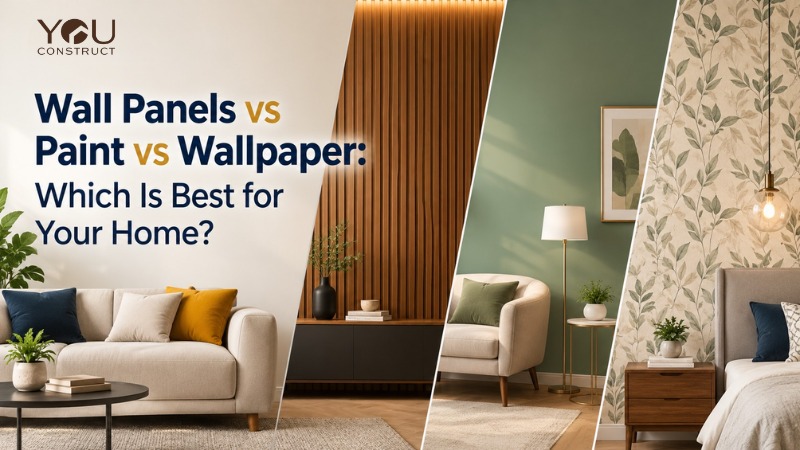 Wall Panels vs Paint vs Wallpaper: Which Is Best for Your Home?
Ask five people which wall finish is best and you’ll get five confident answers. Most of them are right, for their own house. The trick is working out which answer is right for yours.
The short version: paint is the cheapest and easiest, wallpaper gives you patterns paint can’t, and wall panels give you texture and a finished look in one go. Which one wins depends on the room, the wall and your budget. Here’s how to think about each.
Paint: still the default, for good reason
Paint is where most people start, and for a lot of walls it’s where they should stop. It costs less than the other two for covering a large area, it comes in more colours than you’ll ever use, and when you get bored, you repaint.
It also forgives a lot. A scuffed wall can be touched up. A colour you regret can be changed over a weekend.
What paint won’t do is hide a problem. Cracks, flaking patches and damp walls all show through, and painting over them just means you’ll be repainting sooner. Fix the wall first, then paint. If your family has kids or pets, look at washable paints, because a wipeable finish saves you more arguments than any colour choice.
Wallpaper: pattern and personality
Paint is one flat colour. If you want a pattern, a texture or a design that looks different from across the room, wallpaper does what paint can’t.
It works best on one wall rather than all four. A bedroom headboard wall, a dining area, a quiet corner of the living room. Used everywhere, it can feel heavy.
The catch is the wall underneath. Wallpaper needs a smooth, dry surface, and if there’s any dampness it will bubble or peel. That makes it a poor choice for bathrooms, or for any wall that gets damp in the monsoon. Cleaning is also fussier than with paint, and it depends on the type of paper, so check before you buy.
Wall panels: texture, and a faster finish
Wall panels, including PVC wall panels, decorative panels and louvers, are the newest of the three in most Indian homes, and they’re popular for a simple reason: they change how a wall looks, not just its colour. A fluted panel behind a TV unit or a textured wall behind a bed gives the room a focal point that paint struggles to match.
Some panels can also cover small surface flaws, though they’re not a fix for a damp wall, and you should treat that as a bonus rather than a plan.
They cost more upfront. You’re paying for the panels, the fittings and the labour. And not every panel suits every spot. Heat is the one to watch: don’t put them close to a stove or anywhere that gets hot, and read the product specifications before you buy.
If you’re curious what’s out there, you can look through PVC wall panels and compare designs before deciding whether panels are worth the extra.
Side by side
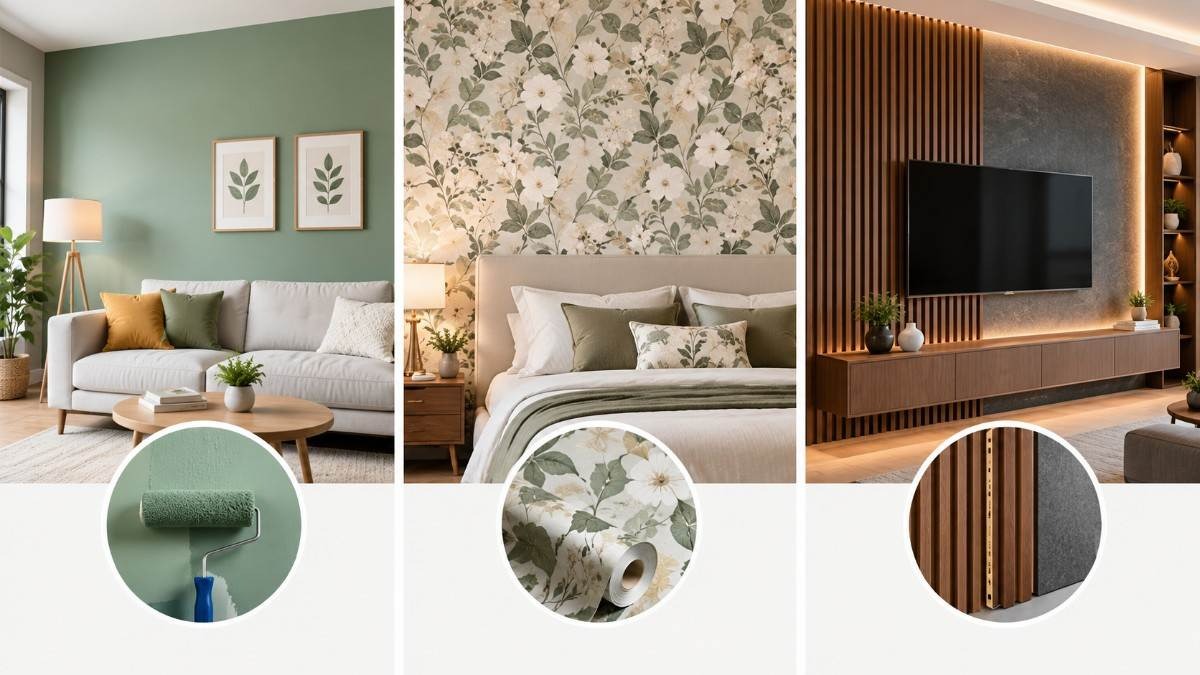
| Paint | Wallpaper | Wall panels | |
| Best for | Whole rooms, quick refreshes | Accent walls, patterns | Feature walls, TV backdrops |
| Upfront cost | Usually lowest | Depends on design and material | Usually highest |
| Easy to change later | Very | Moderate | Least |
| Needs a dry wall | Yes | Yes, very | Check the product |
| Look | Flat colour | Pattern and print | Texture and depth |
Treat the cost row as a general guide, not a rule. Your actual price depends on the quality you choose, the size of the wall and what the installer charges.
What it really costs
Don’t compare material prices on their own. Add the preparation, the installation and what it takes to maintain it over the next few years.
Paint is usually the cheapest way to cover a lot of wall. Wallpaper varies a lot with the design and installation. Panels cost more at the start, but if you only use them on one wall, the total can stay reasonable.
Mix them
You don’t have to pick one for the whole house. The combination that works for a lot of homes is simple: paint for most walls, and one feature wall done with panels or wallpaper. You get the impact where people look, and you save money everywhere else.
A few questions before you decide
- What’s the room used for? A child’s bedroom, a living room and a kitchen all need different things.
- What’s the wall like? If it’s cracked or damp, fix that before anything goes on top.
- How long do you want it to last? A finish you’ll live with for ten years is a different choice from one you might change next year.
- What’s already in the room? Look at your flooring, furniture and lighting. The wall should sit well with them.
You don’t need to redo every wall to change how a home feels. Often, one well-chosen wall does most of the work.
Planning Your Renovation?
You Construct brings construction, renovation and interior materials together from verified vendors, so you can compare options in one place instead of visiting shop after shop. Explore Wall Panels, Paints and More on You Construct →
Contact us:
9779043870 | 9115912323
















No Comments